Across every industry, the health of the workforce is a key driver of organizational success. By prioritizing employee well-being, companies can unlock greater productivity, reduce risks and build a more resilient team. Modern businesses are recognizing the growing importance of corporate wellness programs, which are transforming how organizations support the people behind their business goals.
A corporate wellness program is a benefit package or set of special offers that aims to improve health outcomes and support positive behavior in the workplace. These programs often combine features to support employee physical, emotional and mental health. Successful corporate wellness programs often offer benefits like reduced or free gym memberships, educational opportunities, vaccination clinics and health risk assessments.
Workplace health initiatives benefit employees through:
Investing in workplace wellness is also a proven business strategy with measurable returns for employers and business owners. A recent study showed that employers reported saving $3.78 per employee for every $1 they invested in managing chronic diseases. Furthermore, seven years of employee engagement in health programs resulted in $30 per employee per month in reduced healthcare costs.
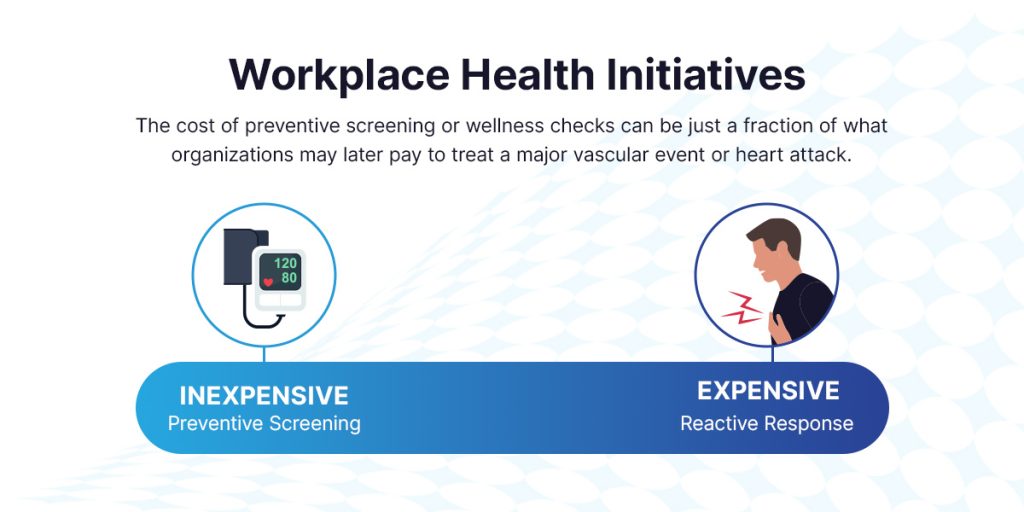
The case for prevention over reaction is clear. The cost of preventive screening or wellness checks can be just a fraction of what organizations may later pay to treat a major vascular event or heart attack. This up-front investment improves employee health and helps organizations avoid high-cost interventions and lost productivity.
Beyond dollars saved, these programs have a significant impact on productivity. Unmanaged health issues, even minor ones, frequently result in employees showing up to work fatigued, in pain or with mental health concerns that impact performance levels. In more serious cases, employees may take stretches of time off, increasing absentee rates and affecting team success. Addressing health proactively through workplace initiatives keeps teams healthy, engaged and truly productive.
High-stress professions such as firefighting, law enforcement and construction carry unique health risks. These workers face intense physical demands, environmental hazards and unpredictable schedules. First responders and industrial workers have higher risks of heart disease, yet many of these workers ignore the warning signs of fatigue, pain or mental health concerns. This “tough it out” mindset can mask early symptoms of serious health issues, leading to delayed intervention and poor outcomes.
Schools and municipal workplaces also experience unique challenges. Educators, bus drivers, custodians and city employees frequently work in rigid, high-pressure environments. Heavy workloads and inflexible hours often lead many workers to delay routine or preventive medical care, unknowingly compounding health risks. These result in a heightened vulnerability to chronic stress and its health impacts.
The consequences of these delays are stark. Data consistently link high-stress jobs with increased rates of hypertension and cardiovascular disease, risks that far exceed those seen in less physically demanding occupations. In these environments, generic “office wellness” tips fall short. Teams need sector-specific strategies that proactively address hidden health hazards, provide accessible screenings and create a supportive culture for early intervention. Ignoring these silent threats risks individual well-being and workplace safety and continuity.
As the workforce ages, the needs of employees over 50 become increasingly important. Veteran team members offer invaluable experience and institutional knowledge, but are especially vulnerable to age-related health issues, including those affecting the vascular system. In fact, nearly 40% of adults 50 and older reported that the most common barriers that interfere with work were poor health, chronic illness or disability. Proactively supporting their health ensures their well-being and the continuity and mentorship they provide to organizations.
Awareness of vascular health is critical, particularly in professions that require prolonged standing, such as teaching, manufacturing and retail. Conditions like peripheral vascular disease (PVD) and varicose veins are prevalent but often go undiagnosed in these settings.
PVD involves narrowed blood vessels, reducing blood flow to the limbs, resulting in pain, fatigue and serious complications such as ulcers or increased risk of cardiovascular events. Varicose veins, while often dismissed as cosmetic, can signal underlying circulation issues and cause discomfort that impairs daily function.
In addition to workplace risk factors, family history plays a major role in vascular health. Genetics can significantly increase susceptibility to PVD and related conditions, regardless of a person’s lifestyle or activity level. That’s why targeted vascular screening for older employees is essential for early detection, intervention and the ongoing success of a multigenerational workforce.
One of the most common reasons employees neglect preventive care is simple but profound — lack of time. For many, especially those in shift-based or high-intensity roles, stepping away from the worksite for a doctor’s appointment can feel impossible without disrupting operations or leaving colleagues short-handed.
On-site mobile screening programs directly address this challenge by bringing healthcare right to employees. These physician-led mobile units operate during work hours, dramatically increasing participation rates without sacrificing productivity or operational continuity. Employees can complete wellness screenings in minutes, eliminating the need for travel, waiting rooms or time off.
Crucially, for an on-site program to be safe and effective, it must be staffed with licensed medical professionals. Medical oversight ensures accurate screenings, real-time consultations and seamless pathways to follow-up care for those who need it. This model builds trust among employees and guarantees clinical rigor, helping organizations safeguard workforce health without logistical headaches or lost time.
A healthy workforce is a productive one, and early detection is a viable strategy for cost control. Empowering employees with accessible, proactive health solutions benefits individuals and organizations alike. Corporate wellness programs create healthier teams, lower costs and lay the foundation for long-term productivity and growth across every sector.
Premier Health Group is a physician-owned medical center. Our team blends expertise, passion and patient-centered care to provide quality care for every patient. We believe that a healthier workplace is a stronger workplace, which is why we offer convenient employee screenings for organizations in the New York and New Jersey metro areas.
Our on-site screenings help team members catch potential health concerns early, giving employees and employers valuable well-being insights. We work with businesses to create a customized screening plan to fit unique workplace needs. Our programs include health checks for cardiovascular conditions, vein and vascular concerns, pain and more. For more information or to create your customized plan, connect with our team.