


Do you wake up exhausted, even after a full night’s sleep? Do you struggle to stay alert during the day? You’re not alone, and you’re not imagining it. The culprit may be sleep apnea, a common but often undiagnosed condition that disrupts your rest and affects your health.
Many people don’t realize they have sleep apnea. However, this condition can lead to serious health consequences, including heart disease, stroke, diabetes and high blood pressure. The good news? Early detection and a holistic approach to sleep apnea treatment can transform your health, restore your energy and help you reclaim your quality of life.
Sleep apnea is a condition where your breathing repeatedly stops and starts during sleep. The disruptions, or apneas, can last from a few seconds to several minutes and occur multiple times each night. Each pause interrupts your sleep cycle, preventing you from reaching the restorative stages of sleep your body needs.
There are two main types of sleep apnea:
In some cases, patients may experience symptoms of both. This is known as combination sleep apnea.
Sleep apnea can often go unnoticed, but certain signs can indicate a problem.
Symptoms during sleep include:
Symptoms you may experience while awake include:
If you recognize these symptoms, it’s important to seek evaluation and consider a diagnosis and treatment for sleep apnea.
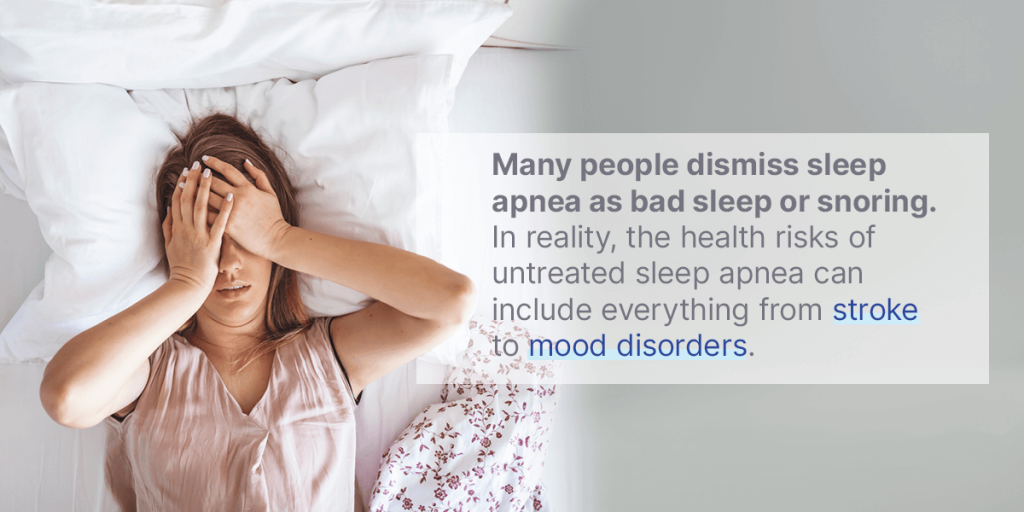
Many people dismiss sleep apnea as bad sleep or snoring. In reality, the health risks of untreated sleep apnea can include everything from stroke to mood disorders. Early detection and management can prevent serious complications and improve long-term outcomes.
Experts recommend that discussion of sleep quality and review of sleep apnea symptoms should be part of every adult’s annual physical, regardless of age.
Sleep apnea places significant stress on your cardiovascular system. Each time your breathing stops, your oxygen levels drop, causing your heart rate and blood pressure to spike. Over time, this strain increases your risk of:
Research from UT Southwestern Medical Center found that young adults ages 20 to 40 with obstructive sleep apnea are three times more likely to experience a cardiovascular event compared to those without the condition. This underscores the importance of early intervention, especially for younger individuals.
Sleep apnea also affects your metabolic and mental well-being. Disrupted sleep and reduced oxygen levels can lead to:
Addressing sleep apnea early can reduce these risks and support overall health.
It is possible to treat sleep apnea without a CPAP through holistic approaches. The following treatment areas can target your symptoms without requiring CPAP.
Being overweight is a leading risk factor for sleep apnea, as excess fat around the neck and throat can block your airway during sleep. Research shows that even modest weight loss of 10% to 15% of body weight can significantly reduce the severity of sleep apnea.
Comprehensive weight management programs combine nutrition counseling, exercise plans and medical supervision to help you lose weight safely and effectively. In some cases, Food and Drug Administration (FDA)-approved weight loss medications may be recommended alongside lifestyle changes to address obesity as a root cause of sleep apnea.
For individuals with mild to moderate sleep apnea, lifestyle coaching may make a substantial difference. Key modifications include:
These changes empower you to take control of your health and can be effective alternatives or complements to CPAP therapy.
Accurate diagnosis is the foundation of effective treatment. At-home sleep studies use portable monitoring devices to record your breathing patterns, oxygen levels and airflow while you sleep — all in the comfort of your own home. This convenient option eliminates the need for an overnight stay in a sleep lab and provides physicians with the data needed to diagnose the type and severity of your sleep apnea.
With a clear diagnosis, your care team can develop a personalized treatment plan tailored to your needs.
A holistic approach to OSA or CSA offers many benefits to your health and well-being:

If you’re ready to address sleep apnea at its root, Premier Health Group in Clifton, New Jersey, is here to help. As a physician-owned practice, our team takes a holistic, patient-centered approach that goes beyond managing symptoms. We focus on identifying and treating the underlying causes of sleep apnea, creating personalized treatment plans tailored to your lifestyle, health goals and unique needs.
Work with our team and receive medically-guided holistic care, from lifestyle management to weight loss programs and CPAP alternatives. Our sleep apnea services are available in both English and Spanish to better serve the diverse communities of the NJ and NY metro area, making it easier to get the care you deserve.
Ready to breathe easier and sleep better? Contact Premier Health Group to discover how a holistic approach to sleep apnea treatment can make all the difference.
