
Managing weight protects long-term health. A healthy weight can lower the risk of type 2 diabetes, different types of cancer, heart disease, and joint and organ strain. However, weight management can be challenging, even with consistent effort.
After early weight loss, the body can reduce calorie burn. In some cases, your brain and hormones may respond to weight loss as if it were a state of shortage, increasing hunger and intensifying cravings. Additionally, as muscle mass lowers with age, resting energy use can be reduced, and some medical conditions or medications may cause you to put on weight.
Many people feel stuck because finding a clear starting point is hard. Fortunately, personalized weight-loss therapy can help you identify the factors contributing to your weight, and then develop a functional plan you can follow and adjust as your needs and results change.
Discover more about the importance of managing your weight to lead a healthier life.
Extra weight strains the heart and arteries by raising blood pressure and cholesterol. The risk of heart disease, stroke and circulation issues increases. At the same time, insulin resistance worsens, increasing the risk of prediabetes and type 2 diabetes mellitus. The joints experience added stress, leading to increased pain and reduced mobility.
Increased body weight forces the heart to work harder and reduces arterial flexibility, impacting the body’s ability to withstand physical stress. These changes contribute to the higher risk of heart disease and stroke.
The vascular system takes strain because:
Excess weight plays a role in the development of chronic diseases. Free fatty acids and chronic inflammation disrupt normal bodily functions, promoting insulin resistance and cancerous tumor growth.
Here’s how excess weight puts you at risk of developing chronic disease:
Even losing small amounts of weight can improve your blood pressure and cholesterol levels. Food, movement and sleep work together to support the following health and lifestyle benefits.
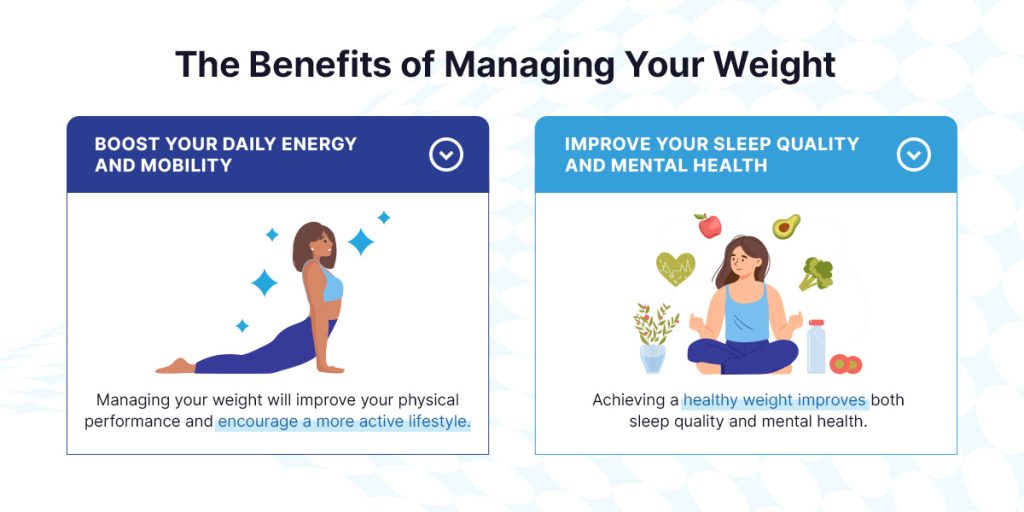
Managing your weight will improve your physical performance and encourage a more active lifestyle. Reducing excess weight improves joint comfort and makes it easier to move, while supporting heart health. These changes help you stay energized and independent and enhance your overall quality of life.
With controlled weight management, you’ll enjoy:
Achieving a healthy weight improves both sleep quality and mental health by supporting better mood and cognitive function. It helps reduce stress and enhance your overall sense of well-being, leading to improved energy and mental clarity throughout the day.
A lower weight helps promote:
Lifestyle changes put you in control of your health — unlike short-term diets that often lead to regaining weight. Small, consistent adjustments create lasting progress, making long-term success achievable. Every choice you make improves your overall health.
A nourishing diet focuses on making healthy, sustainable decisions. By planning meals and snacks ahead of time, you can avoid impulsive options that lead to overeating. Flexibility and balance allow you to nourish your body without restrictive rules or bingeing.
Consider the following when making changes to your diet:
A mix of planned exercise with daily movement helps burn energy throughout the day and supports long-term weight management. Staying active reduces stiffness and helps you maintain a healthy lifestyle as you age.
Aim for a mix of exercise types to ensure your body is getting what it needs:
Excess weight increases the risk of chronic conditions and limits mobility, comfort and independence over time. For many, the journey to lose weight is filled with frustration and setbacks, making it a complex and deeply personal challenge.
At Premier Health Group, we use metabolic and body composition analysis to create personalized nutrition plans and provide lifestyle coaching to support sustainable, positive changes. You don’t have to go through this experience by yourself. We’re here to guide you every step of the way.
Contact us to schedule an appointment or discuss your weight loss options with our team.